
To mark my 50th birthday, we walked 50+ miles around Knoxville, Tennessee. It was awesome! Here's 5 reasons why.
Terrain
The goal for 50-for-50 had always been simple: cover 50 miles, ending on my birthday. As we tried to figure out the logistics of how we might do this, I braced myself for a slog through uninspiring surroundings. Ultimately, we landed on Knoxville, TN to pull off this stunt. To my delight, Knoxville over-delivered.
We walked through quaint suburban neighborhoods, down historic boulevards and into a storied historic district. We hiked along remote-feeling trails and Knoxville's impressive greenway system. We experienced a bit of UT college life, enjoying the campus's impressive gardens and student-run creamery. We traveled on rural-vibes backroads, passing at least one horse farm. We passed two shuls, both with deep historic roots, multiple historic signposts and one very bubbly water treatment plant.
We passed by creeks, swamps, a pristine quarry and a sprawling lake. We crossed the mighty Tennessee river (twice!) and marveled at her bluffs. We passed palatial estates, densely packed subdivisions and a mobile home community. We passed what may be the longest driveway I've ever seen on a house, and an impressively camouflaged campground.
Wildlife sightings were limited, so the turtles, millipede and even statues of Smokey immortalizing past UT mascots were appreciated. Of course there was roadkill. We saw soaring ospreys, plenty of neighborhood robins, a few Canadian geese and one very confused juvenile woodpecker trying to peck a concrete wall.
We delighted in Dunkin's donuts, Bruster's ice cream, Whimsy's cookies and one perfectly prepared smoked salmon benedict. We even enjoyed a cup of homemade lemonade a father and two daughters were selling on their front lawn. We learned about the magic of Weigles, with their clean bathrooms and delicious hot chocolate.
We passed an impressive sculpture garden, the remarkable Strong Alley where majestic murals live side by side with sharp-edged graffiti and the beacon-like Sunsphere. We stood at the foot of the otherworldly Pier 865 sculpture and pondered why it was present in a park named 'the Cradle of Country Music.'
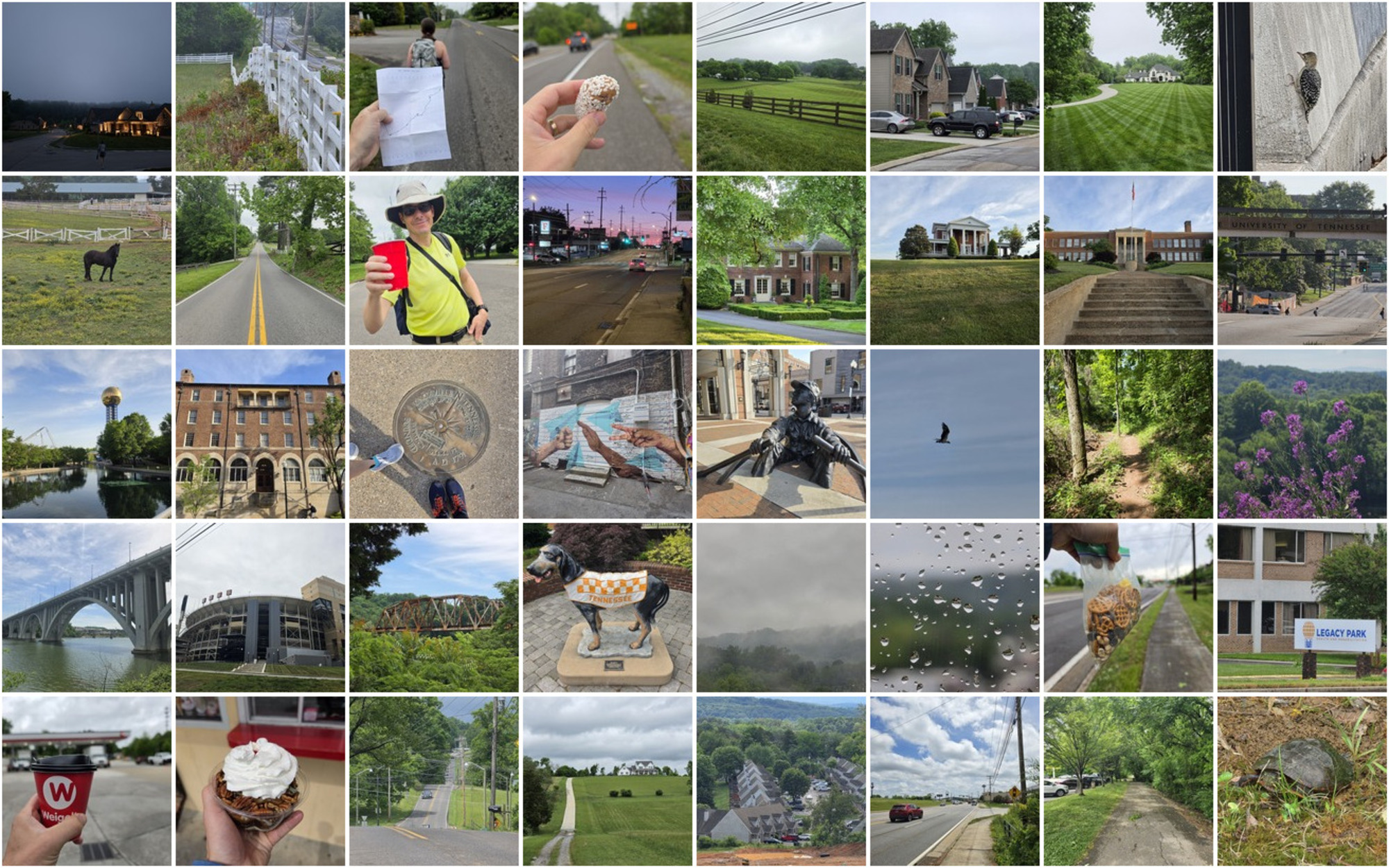
Sure, not all the walking was interesting. But I'd say easily 80% of it was. Go Knoxville!
History
Knoxville also delivered on the history front. We unexpectedly passed by and explored Pleasant Forest Cemetery, a historic cemetery founded in 1796. We got to pay our respects to Archibald Roane, a Continental Army soldier who was present at Cornwallis's surrender in 1781, and ultimately became Tennessee's 2nd governor. We also paid our respects to Lt. Thomas Boyd, who served at Valley Forge under George Washington.
We walked down the same street that General Longstreet's men did when they besieged the Union Army in Knoxville. We stood at the gun emplacements at Fort Dickerson, where Union soldiers defended Knoxville from this same assault.
We walked by Temple Beth El, a shul whose origin story stretches back to 1864 and the death of a single Confederate soldier. It was this death that helped form the area's Hebrew Benevolent Society, which ultimately morphed into the congregation we passed.
We passed the site of the historic Staub Theatre where a young Adolph Ochs served as its first chief usher. Ochs, a local paperboy and printer's apprentice, would go on to purchase and transform the New York Times into a national institution. Ochs' dad, Julius, was a founding member of Temple Beth El, where he officiated Jewish ceremonies.
We passed a marker noting Lizzie Crozier French's role as being instrumental in Tennessee's women's suffrage movement. Tennessee was the 36th state to ratify the 19th Amendment — the last state needed to reach the magic number. The vote was 49-47, with the deciding vote cast by 24-year-old legislator Harry Burn, who changed his vote after receiving a note from his mother urging him to "be a good boy and help Mrs. Catt." Lizzie was known as Knoxville's "silver-tongued suffragist" for her remarkable oratory. She was on the speaking circuit across the South, performing recitations to packed audiences who demanded encores — audiences who described her delivery as "a continuous, vivid picture before the hearers."
Discovery
Our walk served up a number of delightful mysteries for us to noodle over as we knocked out the miles. Some we teased out ourselves, some took the help of our on-demand tour guide, Gemini, and others took deeper research after the fact. All made the walk anything but a slog. Here are a few of our favorites. How many do you know?
What are these pink lines for?
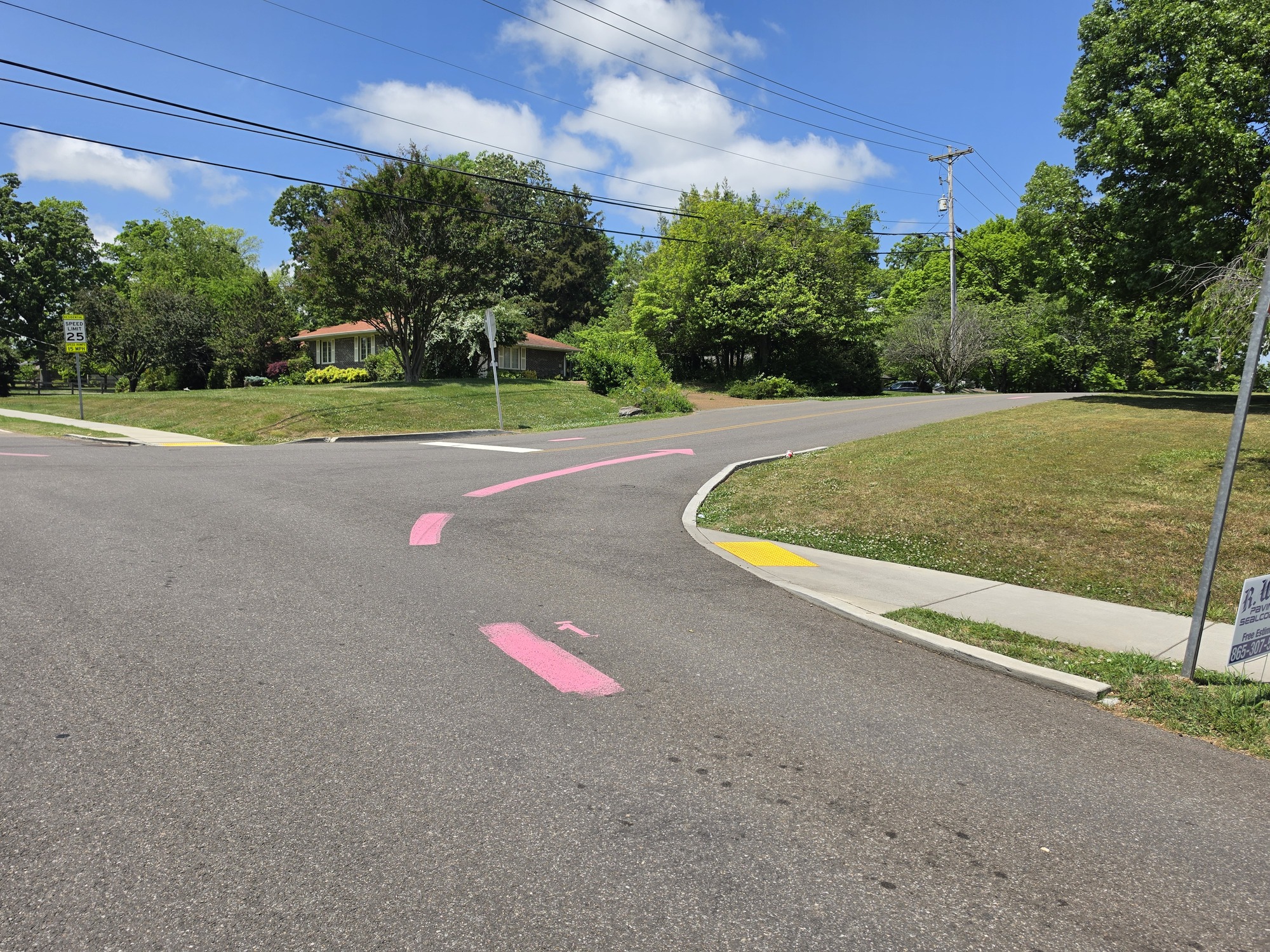
When I asked Gemini about the random pink street markings we were seeing in a Knoxville neighborhood, I expected a hedge. Instead, it nailed it: we'd stumbled onto a Dogwood Arts Trail. Cool, but it gets even better. In 1947, author John Gunther called Knoxville "the ugliest city in America." Knoxville's response: pink paint. Starting in 1955, the city began marking Dogwood Trails — routes through featured gardens, ~90 miles across 13 neighborhoods, repainted each April with ~100 gallons of custom-blended pink.
Was President Herbert Hoover really the first civilian to break the sound barrier?
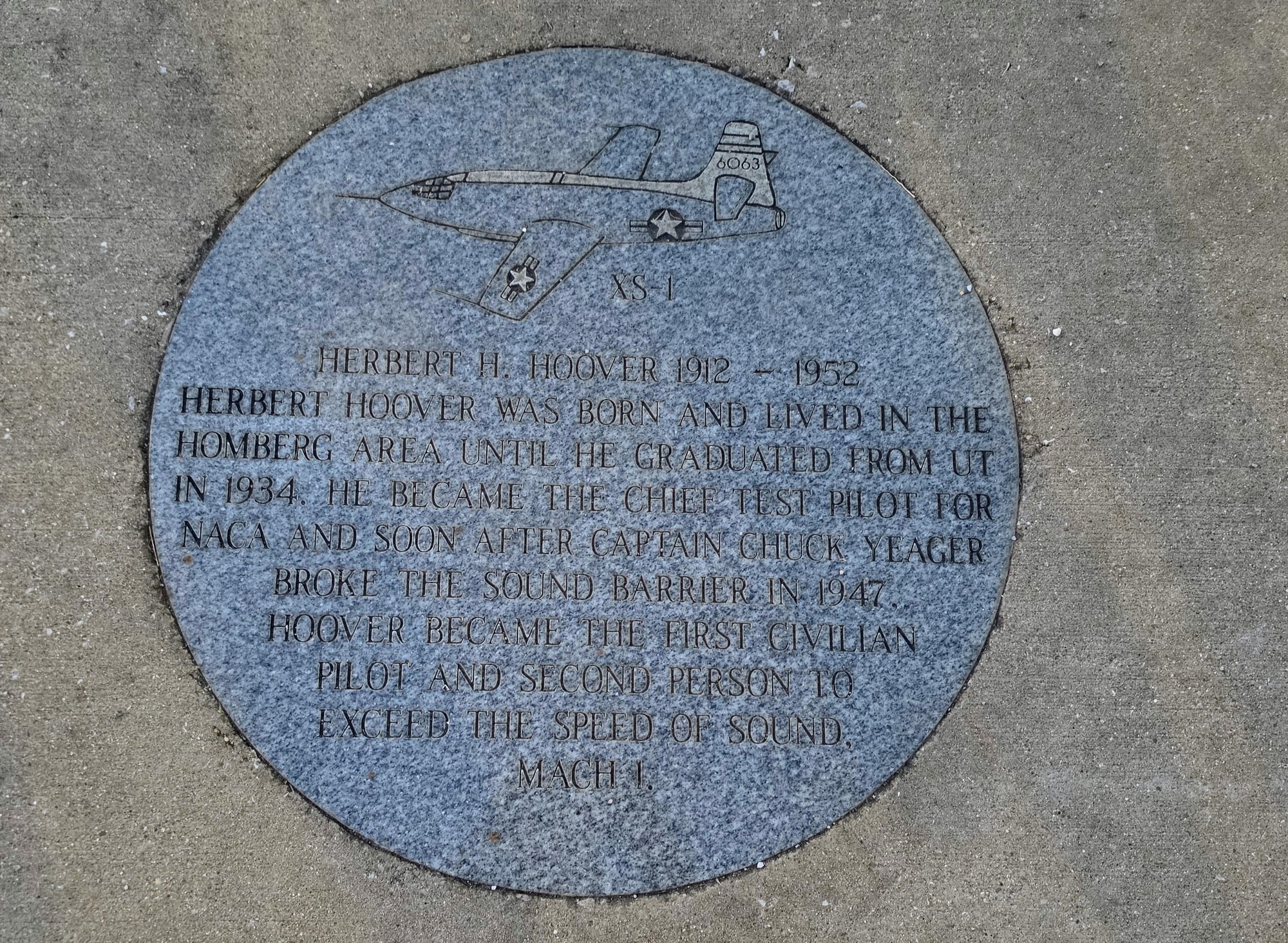
Uh, no. The marker is about Herbert Hoover the test pilot, not the president. A different Herb — and one with nerves of steel. Take the time the canopy came loose mid-flight and bashed him in the face, stunning him and blinding him with his own blood. He recovered and landed the plane safely. He may not have been a president, but he was a boss.
Why does this statue look familiar?
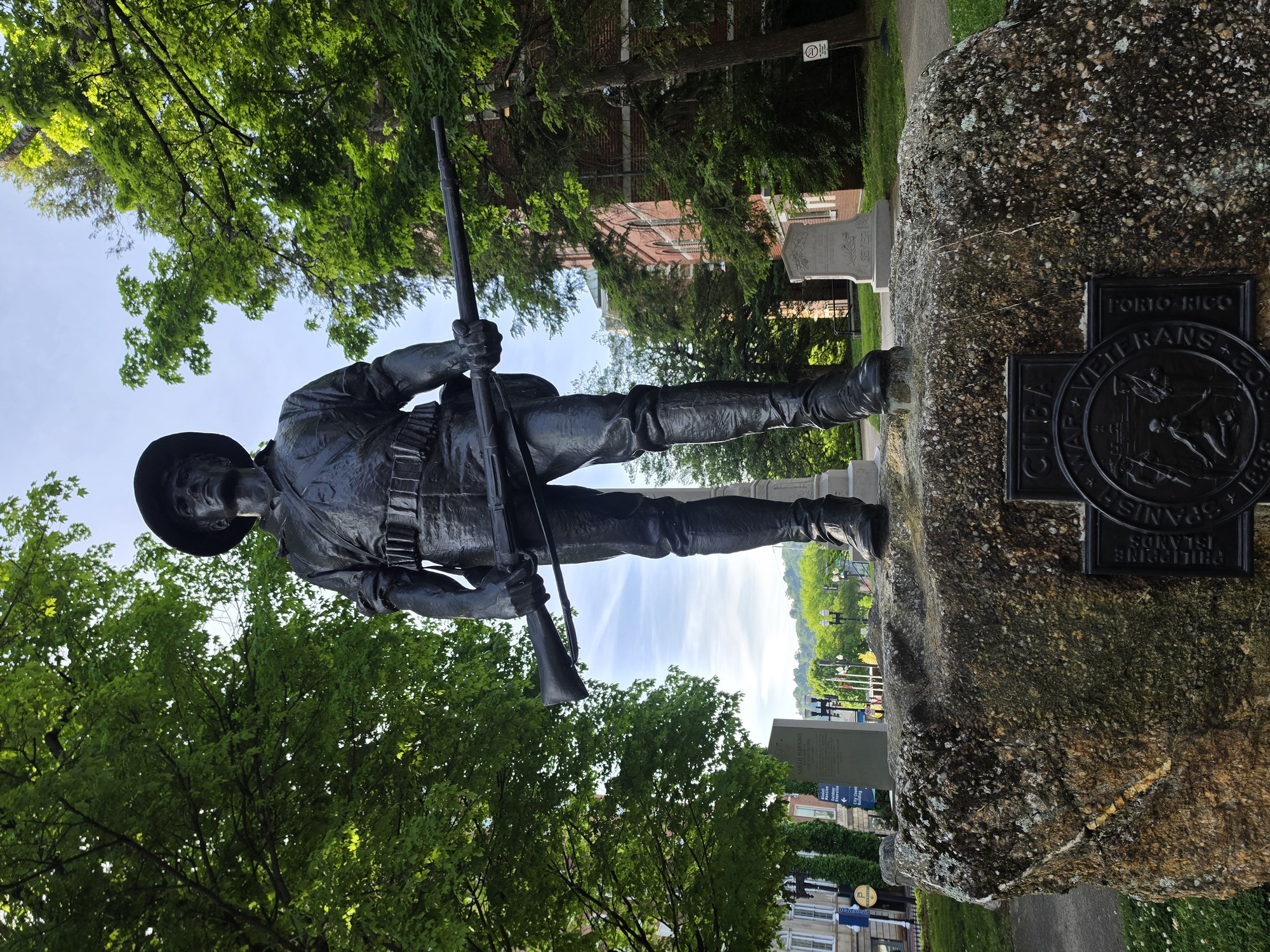
A nearly identical one stands at the entrance to Arlington Cemetery — four minutes from home. The statue is called "The Hiker," created in 1906 by sculptor Theo Alice Ruggles Kitson, honoring Spanish-American War veterans. In 1921, Gorham Manufacturing bought the casting rights and produced 50+ copies, now spread across 23 states — who knew statues came in editions? The name pairs well with the 50-for-50 theme. But wait, there's more: 37 of them serve as air-pollution monitors — identical statues placed in different climates, letting scientists measure environmental wear on the same source material. A twins study in bronze.
What type of bird is this, and why did we see so many of them?
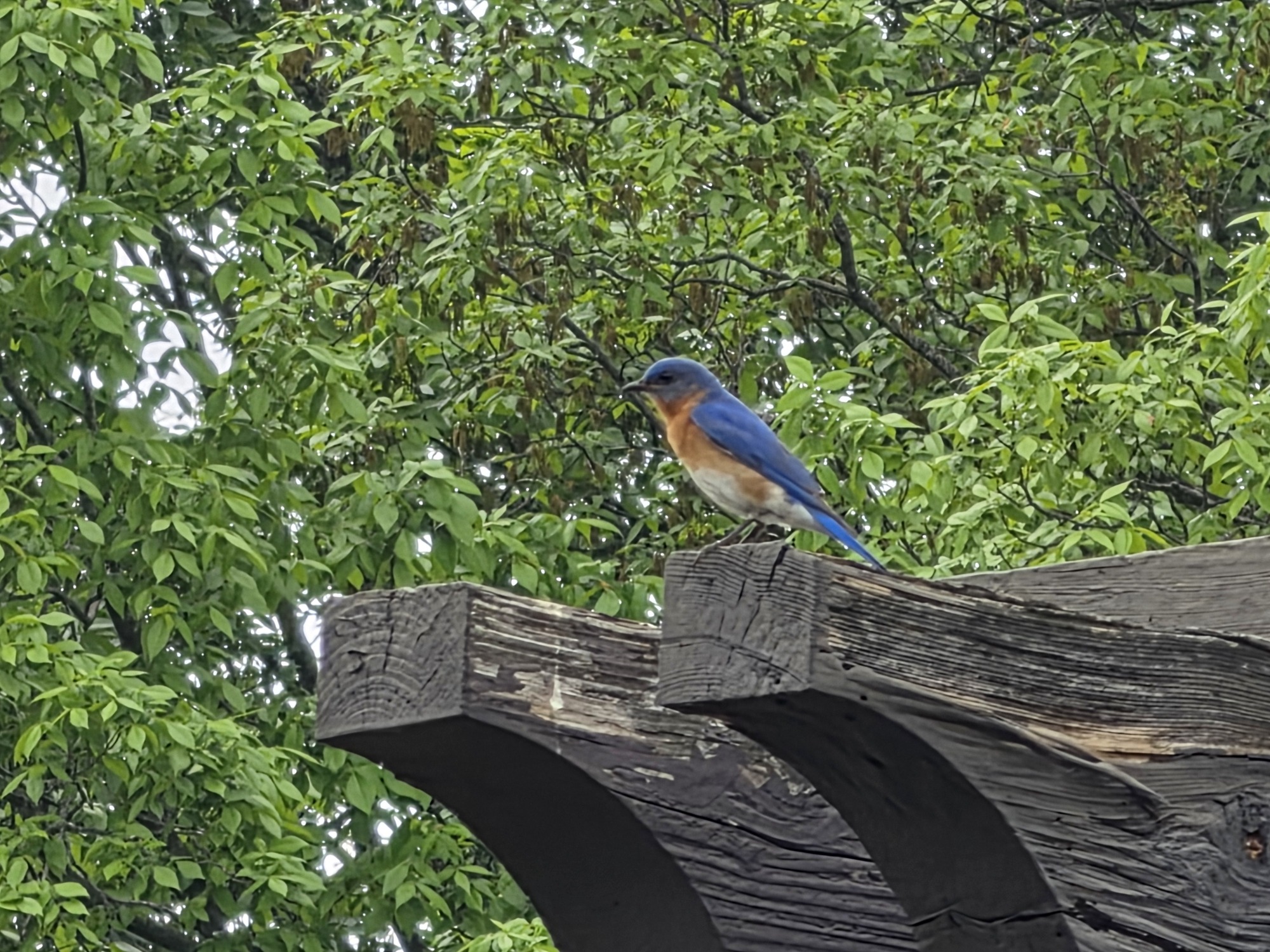
Eastern Bluebirds — common on the East Coast, but a rare sight in DC. Why? From 1920 to 1970, the local population collapsed, going from as common as a robin to near-local-extinction. The culprit: House Sparrows and European Starlings, introduced in the 1800s, which outcompeted them for nesting cavities and ultimately displaced them. DC readers: a Silver Spring resident wrote to the Evening Star in 1956 about exactly this problem in his own backyard.
What's up with this woke sign, 'Unity in Diversity'?
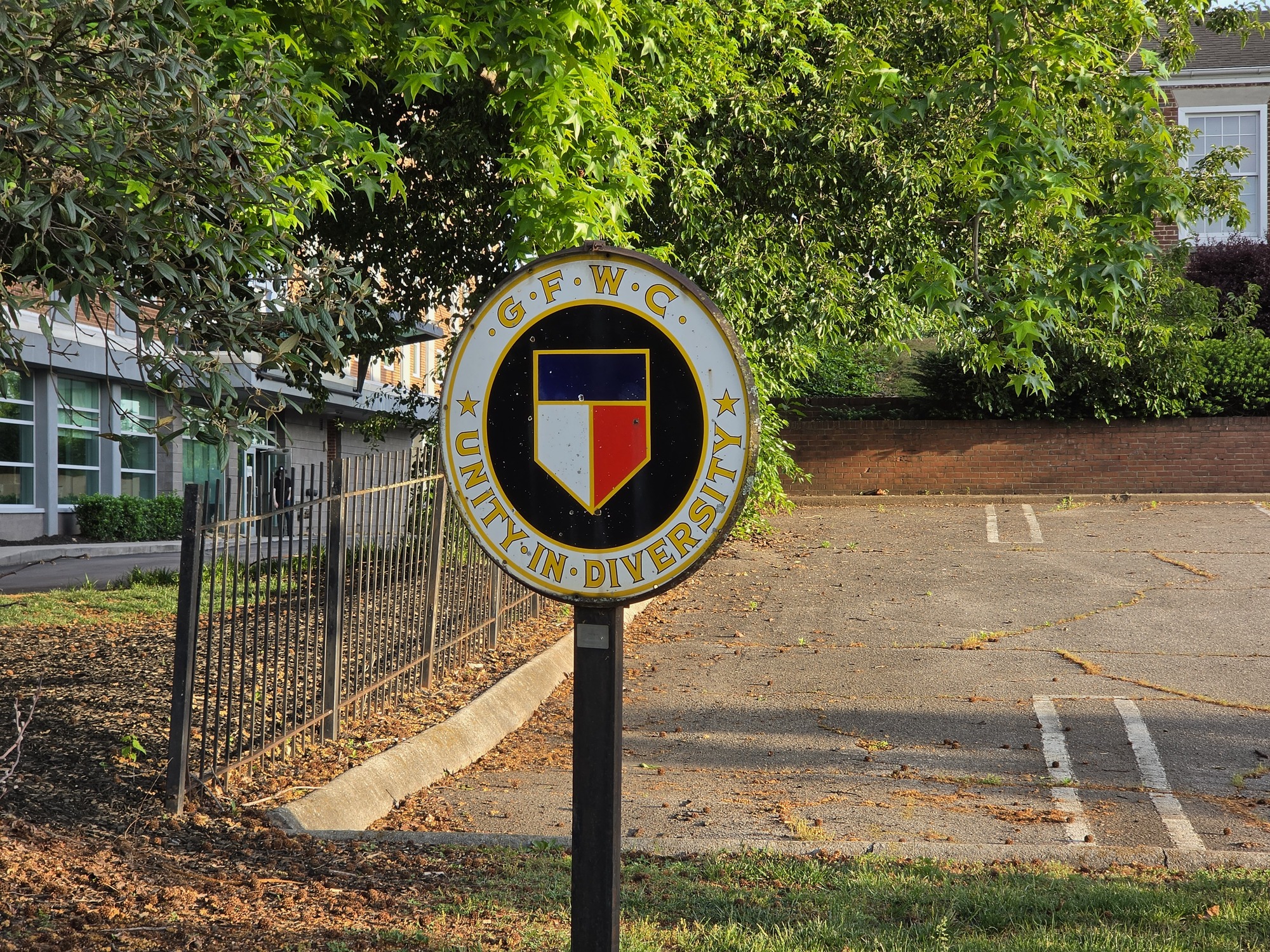
Before women could vote, women organized. The General Federation of Women's Clubs — founded 1890 — was the national infrastructure for that organizing: at its peak, ~2 million members building libraries, fighting child labor, pushing for public health. "Unity in Diversity" was their motto, coined at the 1889 founding meeting — 130 years before it became a woke battle cry. The sign sits next to Lizzie French's marker because French founded the Ossoli Circle — Knoxville's women's civic club, est. 1885 — and personally attended the GFWC's 1889 organizing meeting as Ossoli's representative, making it the first federated women's club in the South.
Why does this street sign sound familiar?
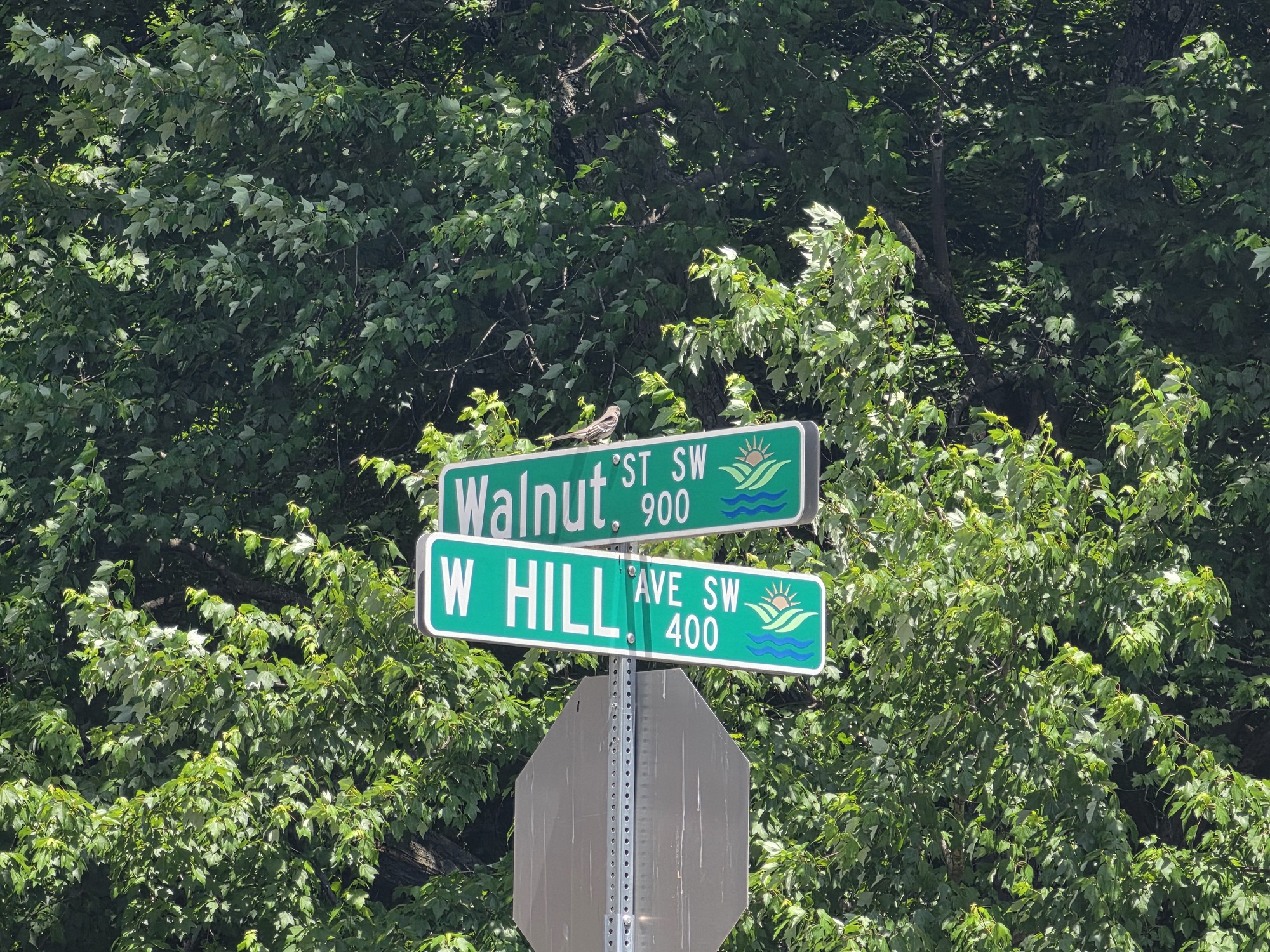
Shira went to college in Philly, and I visited her more times than I can count. When we spotted Walnut Street in downtown Knoxville, then Locust a block over, both of us thought of her college days. I pulled out Gemini and asked what felt like a long-shot question: is there any actual connection between these Knoxville street names and Philadelphia's? I fully expected "fun coincidence, but no." Instead: "You've got a sharp eye! There actually is a connection." Charles McClung, who surveyed Knoxville's original 64 lots in 1791, had previously lived in Philadelphia — and brought the names with him. Walnut, Locust, and Church are all deliberate Philadelphia echoes. Gemini's verdict: "18th-century hometown nostalgia that became the permanent map of downtown Knoxville." Bonus: Gay Street in Knoxville is thought to be named after Gay Street in Baltimore — our neighbor to the north.
Gear MVPs
No blog post about a foot-powered adventure would be complete without a nod to the gear that made it work.
Shira's MVP: KT Tape. Over the years, Shira has been plagued with knee and ankle pain. We followed this tutorial for ankle support, and this one for knee support. And just like that, Shira had no pain at either location.
On day 2, Shira awoke with pretty severe pain at the top of her left foot. It hurt enough that she imagined it might be a stress fracture. We followed this top-of-foot pain taping guide, and the pain subsided.
How a couple of strips of well-placed tape can make such a difference is beyond me. But it worked. KT Tape takes some practice to apply, so if you're interested, try it before the big day. That said, it's awfully forgiving: my results never look as nice as the video versions, and yet they're still effective.
Ben's MVP: Shira's Mom's (z"l) 20,100 mAh battery pack. I relied on three devices for this walk: my Garmin Venu 2 Plus for real-time stats, my now-retired Galaxy S22 Ultra running Backcountry Navigator to reliably record our GPS track, and my new Galaxy S26 Ultra for photos, mile-marker voice notes, and Gemini field research. The Garmin and S22 held up fine on battery. The S26, thanks to all the photos, did not.
We inherited from Shira's Mom's estate a massive Ankur 20,100 mAh battery. Day one, I reluctantly schlepped it as a just-in-case item — heavy enough that I almost left it at the hotel on day two. I brought it anyway. When my phone hit 33% around 10am, I knew I was in trouble. That's when I grabbed Mom's powerbank. As luck would have it, the shorts I was wearing had a cell-phone pocket that fit the battery perfectly. I dropped it in, ran a cable to my phone in the front pocket, and charged on the go.
For the remainder of the walk, I kept my phone charged and smiled as I got to bring Shira's Mom along on our walk in an unexpected way.
The Why
As we ticked off the miles, I mulled over why we were even doing this. No doubt, the idea had its roots in my ego. I wanted my 50th birthday marked by a physical accomplishment. However, as we neared completion of the route it occurred to me that our undertaking had morphed into far more than a show of strength. We'd spent significant time planning our route, tuning gear and food lists. We breezed through some parts of the walk, while other parts were a challenge. We had the joy of discovery and moments of perfect timing, interspersed with pain and the hint of failure. Ultimately, we crushed our goal (52 miles!), even finishing on speaking terms.
In short, I'd given myself the gift of adventure. More than that, it was a right-sized adventure. This was a real challenge, with real payout, all without turning into a burden.
Hovering in the back of my mind since we committed to the 50-for-50 were two simple questions: was it going to be worth it? And was this the desperate act of an aging man? Was it worth it? Absolutely. A desperate act? Not even close. Thanks to all Knoxville had to offer, this was the real deal, an adventure to be proud of.
Time to start planning 60-for-60!
I captured a selfie and some voice notes at each mile marker. Find these field notes here.


No comments:
Post a Comment