Showing posts with label eduction. Show all posts

Thursday, December 11, 2014

Fearless, Courageous and a little bit Crazy: The Pilots of the Aéropostale

Try doing a Google Image search for Aéropostale. If you're like me, you'll receive a page full of company logos and store photos. Now hold that thought.

I'm making my way through Wind, Sand and Stars, Antoine de Saint-Exupery's book which includes lyrical descriptions of him and his fellow Aéropostale pilots. And let me tell you, these guys were incredible. Think Pony Express, but in the air, with unreliable aircraft, extremely limited instruments, and the slimmest margin for error. Just about every flight involved risking your life.

Now consider those Google search results. To have the term Aéropostale usurped by a trendy clothing company is just pathetic.

Take this tale of Henri Guillaumet, an Aéropostale pilot who's route consisted of crossing the Andes:

This particular flight took place in June 1930. The Buenos Aires-Santiago route, which had opened several months before, was the most difficult of all, and the famous pilot Mermoz had chosen Guillaumet to fly it. The Andes' peaks rose to an altitude of 7,000 metres; planes at this time could not reach such heights and so had to weave their way through the mountains.

When he left Santiago in his Potez 25, Guillaumet had made this flight a hundred times before. At an altitude of 6,500 metres, he ran into a huge storm. He set down near Laguna Diamente, a lake that he knew. When he tried to take off again, a layer of snow, 80 centimetres deep, overturned his machine. Hidden under his plane, he could hear other Aeropostale planes that had been sent to rescue him, but he wasn't able to see them. He decided to walk, dressed in his leather pilot suit and an overcoat.

Spoiler alert: depending on the account you read he either walked for 3 days and 3 nights or 5 days and 4 nights before he was finally rescued. Within 3 weeks he was flying again. And most importantly, after the snow melted the plane was recovered and the mail was finally forwarded on to its final destination. The letters were marked in a classically bureaucratic manner with the phrase "Service Delay." Delay indeed.

This should be a snapshot of the recovered plane:

And here's one of those "Service Delay" letters:

Speaking of delivering the mail by plane, there's actually an important airmail site about 10 minutes drive from our home. That would be the field where the first mail delivery flight occurred between DC and New York with a stop over in Philadelphia:

On that fog shrouded mid-May morning in 1918, President Woodrow Wilson handed his personal letter of greetings to a very young and relatively inexperienced Army Air Service pilot at Potomac Park polo grounds in Washington, DC, to be flown to the Mayor of New York City, via a relay stopover at Philadelphia, PA. Simultaneously, another Army pilot was departing from Hazelhurst Field on Long Island, NY, for the same relay handover point in Philly. This may sound simple to modern readers, but in wartime 1918, with springtime dense morning fog over the entire northeast coast, and no available pilots trained in ANY cross country navigation, let alone instrument flying, this was taking extremely high risk.

Like nearly all demos, the presenters thought they had a foolproof plan. And like nearly all demos, nothing worked as expected. In this case, the plan was to have the pilot fly Northeast to Philadelphia by using railroad tracks as a navigational reference. Yeah, didn't quite work out:

A short time [after takeoff], a phone call was received at the polo field communications tent. It was Lt. Boyle. He had gotten lost and made an emergency landing in a farmer’s field. The stub crops caught the landing gear spreader bar and the prop dug in and flipped the JN onto its back. He was unhurt. The mail was not damaged or lost. His location was a farm in Waldorf, MD, southeast of Washington, not northeast. He had followed the railroad tracks, but the wrong tracks.

D'oh. How classic.

I'm telling you, I'll never look at a letter stamped "Air Mail" quite the same way again. These guys are my new heroes.

Wednesday, October 01, 2014

A Case for War Re-enactments

I've never really been for or against military re-enactments. As hobbies go, if it's one you enjoy, I say go for it! But I found these insights to be pretty compelling:

Don't get me wrong. I love Civil War re-enactments. A few thousand guys -- fellow history fanatics -- camping out on a summer weekend, with horses, explosions, cool uniforms and antique gear, marching and charging, noise, gunpowder, celebrating the minutiae and deeper meanings of iconic events -- all the good things about a war, and nobody gets hurt (except the occasional horse bite, twisted ankle, bad food reaction, or heat stress).

Can you imagine a better sign that two once-enemy peoples have buried the hatchet than being able to re-enact an old battle for the sheer fascination with history, legacy, and friendships? Imagine a world, for instance, where some day Israelis and Egyptians might stage annual re-eactments of the Suez Canal crossings of the 1973 Yom Kippur War (Imagine the great gear for that!), then trade memorabilia and drink beers together over a campfire. Then you'd know that true peace had really come to the Middle East.

Also, is there a better way to learn history than to actually live it?

Read the whole article here.

Tuesday, September 09, 2014

Black Squirrels in Arlington - Blame (or Thank) Canada

This past Shabbat, as I was walking home from shul with a relative newcomer to the area, we saw a black squirrel. I started to relay a story that my Brother had recently told me about their origin, but quickly realized I verify what the heck I was saying before I started spreading it as fact. So here's what we know about black squirrels in the area:

In a nutshell: Where did Washington’s black squirrels come from?

They came from Canada, specifically from Rondeau Provincial Park, a peninsula in Morpeth, Ontario, that juts like a uvula into Lake Erie.

The first batch of black squirrels — eight in number — was sent to the National Zoo in 1902 by Thomas W. Gibson, Ontario’s superintendent for parks. Smithsonian secretary Samuel P. Langley, in his report to Congress that year, wrote that the squirrels were accepted “in exchange,” and, indeed, checking Canadian records, Answer Man discovered that Rondeau park received an unspecified number of gray squirrels from the Smithsonian. (They are “doing nicely,” reported park caretaker Isaac Gardiner.)

We also know that the squirrels were released into the "northwestern part of the zoo."

The juicy bits of the story appear be lost to history. Mainly: was the exchange done for scientific reasons, or was it pure hubris? And was the introduction intended to spread outside the zoo, or was that an oops?

In the end, the National Zoo got lucky. The squirrels do well here, living in peace with their gray neighbors and haven't upset the ecosystem in a significant way.

But that's not something we should take for granted. Lest we forget the lesson of Thomas Austin who in 1859 wrote this off hand comment about another fluffy creature he thought would be a good idea to introduce into his neighborhood:

"The introduction of a few rabbits could do little harm and might provide a touch of home, in addition to a spot of hunting."

And thus started Australia's famous Rabbit outbreak. By 1900 the rabbits had reached plague proportions, with the country scrambling to figure out how to contain the problem. One novel (ridiculous?) solution: build the world's longest rabbit fence (yeah, this failed). In the end, biological warfare did the trick, with the myxomatosis virus being strategically used to wipe out 99.98% of the rabbit population (without harming humans or other species - wow!).

So yeah, the National Zoo got lucky. Let's not try that trick again.

Monday, June 23, 2014

Nailed it: clickhole.com

I know I'm late to the party on this one, but I can't resist piling on: clickhole.com, Onion's version of Buzzfeed, rocks. I mean, they totally nailed it:

All these stories, if tweaked just slightly, would fit perfectly on Buzzfeed (and related sites). I guess this shows just how pervasive Buzzfeed style writing has become. Forget e-mail or text messaging ruining kids ability to write or speak, the new target is going to be Buzzfeed. I can't wait till some high school student hands in a top 10 list instead of an essay for their final project on Hamlet.

I first learned about clickhole via SethGodin's Blog

Monday, May 19, 2014

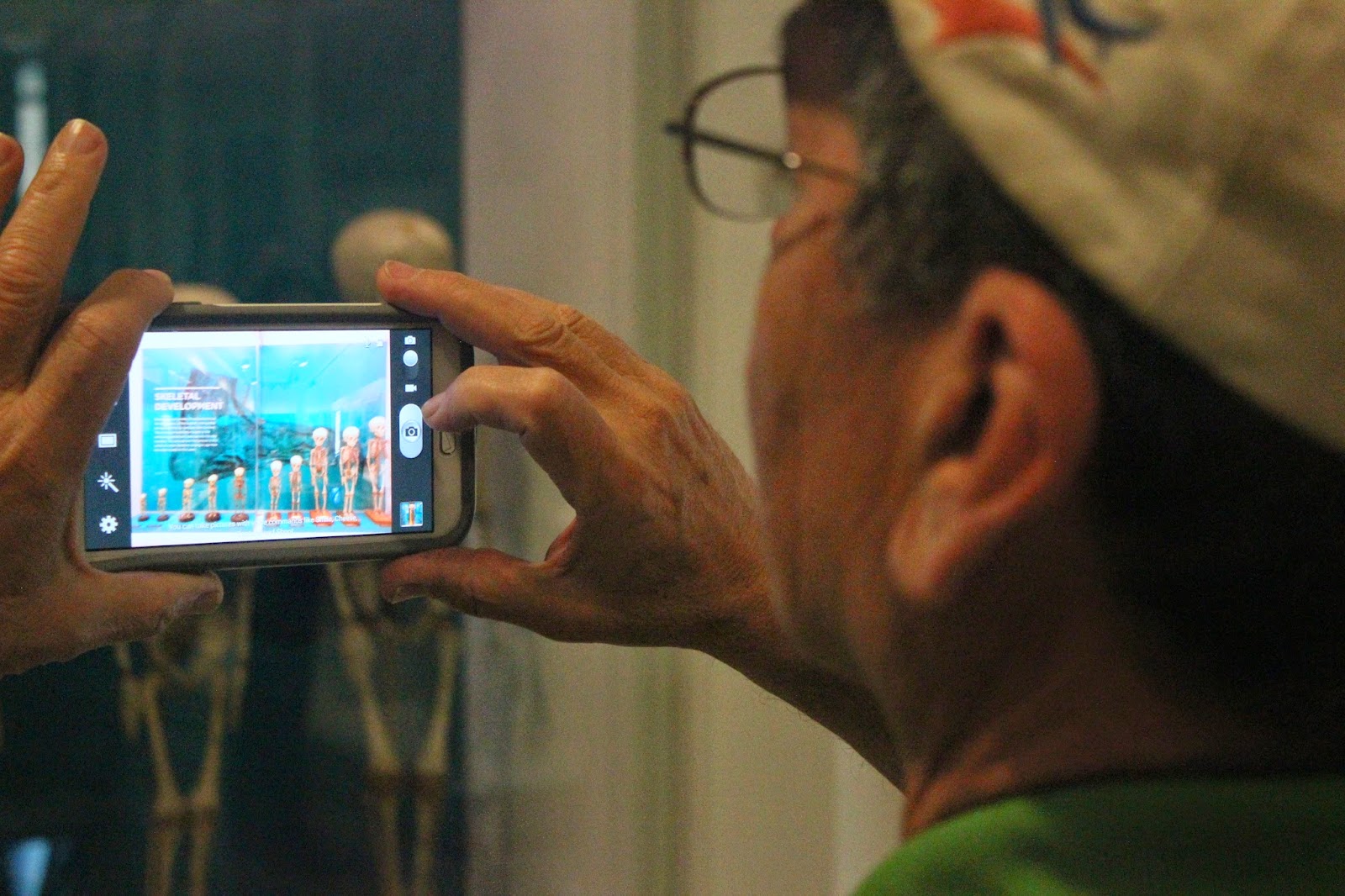
National Museum of Health and Medicine - Gross Enough For My Wife, Historically Intriguing Enough For Me

With my parents in town, I wanted to find a museum that both they and Shira would enjoy. A tall order considering my wife's general ambivalence to all things museum like. But, I did indeed find a winner: the National Museum of Health and Medicine. What this out of the way Smithsonian lacks in location and size it makes up for in quality and the contents of its collection.

The museum itself consists of one descent size floor with 3 large rooms. It's not a random display case in a building's lobby, but it's also not the size of the well known Smithsonian on the Mall. Still, the collection of items they have on display are absolutely top shelf. It also bucks the trend of trying striving for interactive and over the top exhibits. This is an old school museum with interesting pieces in display cases; there's almost nothing hands on to do. In this case, the simple display approach really works.

F As for what's on display, they've got the bullet that killed Lincoln; the skeleton of the first Monkey to survive space travel; the love letter used to gather DNA to identify Colonel Charles Scharf's remains; the surgery kit of Mary E. Walker, the only woman to date to receive the Medal of Honor; a microscope from the 1600's used by Robert Hooke and much more. The museum has an extensive collection of Civil War artifacts. Between the items on display and the stories, I really came away with the sense that Civil War medicine was actually pretty sophisticated for its day. I always think the Civil War surgeons had more in common with carpenters of today than doctors, but that's really selling them short. Heck, the forensic analysis done on Captian Heny Wirz's remains, the commandant of Andersonville Prison during the Civil War, would fit in just fine with any episode of CSI or Bones (I can see it now: CSI: Civil War).

Yes, the museum (and heck, my photos below) contains lots of bones, organs and other things that could make you go "ewwwwww." But, as a number of folks stated in Yelp, the museum has been renovated so that it's less oriented to shock and creepiness, than it is to eduction. For sheer gross factor, you're just going to have to make the trek to the Mutter Museum in Philadelphia.

All in all, any museum that holds my wife's interest has to be something special. And this guy did the trick. As for my parents, they also found the museum quite interesting. Between my Mom's Master's Degree in Microbiology, and my Dad being a PhD / Biology professor, this was all right up their alley. Of course, my Mom being a Mom, nothing could gross her out.

Thursday, April 11, 2013

Review: The Year of Learning Dangerously: Adventures in Homeschooling

I pretty much knew the story arc of The Year of Learning Dangerously: Adventures in Homeschooling by Quinn Cummings after scanning the first two pages of the book. Cummings, for reasons I wasn't quite sure of yet, was going to need to home school her child, I'd get an education in the world of homeschooling and all would turn out just fine. And even with the predictable nature of the book, I found it absolutely riveting. Cummings, it turns out, is a hilarious author. I just couldn't put the book down; not in the library after I picked it up, and not at home once I started to reading it in earnest.

I'm definitely a sucker for a good expirementation book. What better way to turn both the good and bad parts of an experience into something useful? Most of the experiences outlined in the book were both humorous and educational. Cummings lost me a bit when she attended (snuck into?) a number of fundamentalist Christian events, as that seemed like she was gathering fodder for her book and not genuinely interested in adopting their practices. Still, this gave me another view into the homeschooling world, so I'm appreciative.

It's actually only fairly recently (within a few years) that I learned how controversial homeschooling can be. Perhaps that's because I've known so few (if any?) people who were homeschooled, so it was almost other-world concept. Cummings does a fairly good job of laying out some common concerns people raise and providing sane responses to them. She also gives us a peek at the dark side of home schooling where kids can be deprived of information, and it can be used for downright evil purposes. She also does a solid job of not bashing traditional school, and lays out a strong case for frustrated teachers who feel like they don't actually get to teach.

Without giving away the ending of the book, I will mention that I very much like Cummings' prescription for eduction. To her, it's not about whether homeschooling is better than the traditional classroom, it's about combining the best that each environment has to offer. "School" may be 2 days spent in a standard classroom, a couple of days at home working on math and weekends attending an an online French course taught by a teacher in Paris. This trend matches up to our work environments, where being at the office all the time doesn't always make sense (unless you work at Yahoo!, of course). The challenge with this vision, of course, is scalability. We have enough to juggle with our 8 year old, I can't imagine also adding "craft and execute educational curriculum" to the list.

I have to admit, Cummings vision does tickle the entrepreneurial side of my brain. She confirms a hunch I've had for a long time which is that eduction doesn't have to be considered and solved solely on a massive state or federal level. If one mom can make a difference with one child, then one smart entrepreneur should be able to do the same thing. If our educational system is broken, we don't need to wait for someone else to solve the problem, any one person can start on it today.

Tuesday, July 17, 2012

7 Minutes of Terror Makes for 5 Minutes of Awesome Video

In about 20 days, NASA's Curiosity rover will land on Mars. Doing so, involves going from 13,000Mph to 0 in 7 minutes, all done automatically by a per-programmed computer. The video below explains how they solved a number of problems to make it work. The solution is scientific problem solving at its best. Really, it's a riveting video.

My favorite quote:

This big huge parachute that we've got, it will only slow us down to about 200 miles per hour...and that's not slow enough to land...so...we have no choice...we've got to cut it off...and come down on rockets.

Friday, June 22, 2012

Raspberry Pi - Techie Yummyness

I finally got around to discovering the Raspberry Pi project - and boy is it a fun one. It's along the same lines as my beloved OLPC project. That is, it's a charity organization that wants to get computers into the hands of kids for educational purposes. (There's also plenty of differences between the projects).

The Raspberry Pi is tiny, about the size of a credit card, and dirty cheap - just $35. Though, it's just the core computer and needs you to provide a keyboard and monitor among other things. It's the ultimate geek project, and I have the urge to buy one Just Because.

Here, see it in action:

Seems to me, that whether they intended it or not, they dodged some of issues that plagued the OLPC project, including:

  • Not allowing the marketing to outpace the technology. The technology behind the OLPC was amazing. But, not as amazing as the polished marketing effort made it look. The result: lots of disappointed owners. Selling the Pi as just a raw circuit board is brilliant: it speaks loudly and clearly that this is great technology, but don't expect polish (yet).
  • The devices are getting into the right hands. Again, because of the bare bones look, it's tech geeks that are going to be drawn to this thing. And that's a good thing, because at this stage, that's who needs to be playing with it. A general user would just get frustrated.

Two more thoughts:

1. Getting computers into the hands of kids to teach programming is among the most noble causes in the world. But, the reality is, it's us software developers who need to be working on creative solutions to do this. The hardware, while sexy and amazing, is the easy part. Coming up with a software pack and course work, now that's truly tricky territory. The Racket folks have made some excellent progress in this department, it seems.

2. I love the notion of a kid having his own computer, even one he plugs and sets up himself. It takes some of the mystery out of the process, and reminds them that this isn't some magic box. There's also a sort of ownership that goes with it. To that end, you could actually simulate something like the Raspberry Pi by running Linux on a thumb drive. Again, it becomes the child's computer, even if isn't exactly all their hardware.

All in all, a most excellent project. And more importantly, when is it going to boot up into a Scheme machine?

Friday, June 01, 2012

Insects - Nature's Evolutionary Scratch Pad

While poking around one my client's websites, I found this fascinating article on Weevil anatomy: Weevils evolved nut-and-screw joint: Mother Nature beat hardware stores by millions of years.

The article is a quick and interesting read. But, what really caught my eye was this quote:

The weevil joint “is remarkable from a mechanical and anatomical standpoint,” says Roy Ritzmann, who studies insect locomotion at Case Western Reserve University in Cleveland. “It does confirm my notion that just about anything that is possible, insects will have evolved.”

Makes me wonder what other funky things insects do that we just ignore.

Wednesday, May 16, 2012

Rough Science: Reality TV As It Should Be

I stumbled on this old post on CoolTools talking about Rough Science. Here's how Cool Tool describes it:

A very cool BBC series wherein the crafty producers take a bunch of scientists and technicians to a remote location and have them recreate sophisticated tools and inventions using only the primitive materials on hand. Vines, wood, bits of metal, shells. Here: make a clock (with bell), or a device to record sounds, or how about a camera, microscope, soap and sunblock?; or go survey and map the island -- using tools of your own construction. You don't know science until you can roll your own.

And wouldn't you know it, someone has uploaded the episodes to YouTube. The quality is awful, and this is reality TV, so the acting is a bit cheesy. But, it's awesome none the less. First off, the concept of exploring science by rudimentary problem solving is just so powerful. The challenges are mind boggling (map an island in 3 days without using any survey equipment, or even pen and paper), and the solutions wonderfully clever. And the atmosphere of team building, creativity and learning from failure, makes this the kind of TV you really want to watch.

Forget watching castaways eat slimy bugs. Watch them figure out their latitude and longitude, it's much more rewarding (and educational!).

Here, watch an episode: